
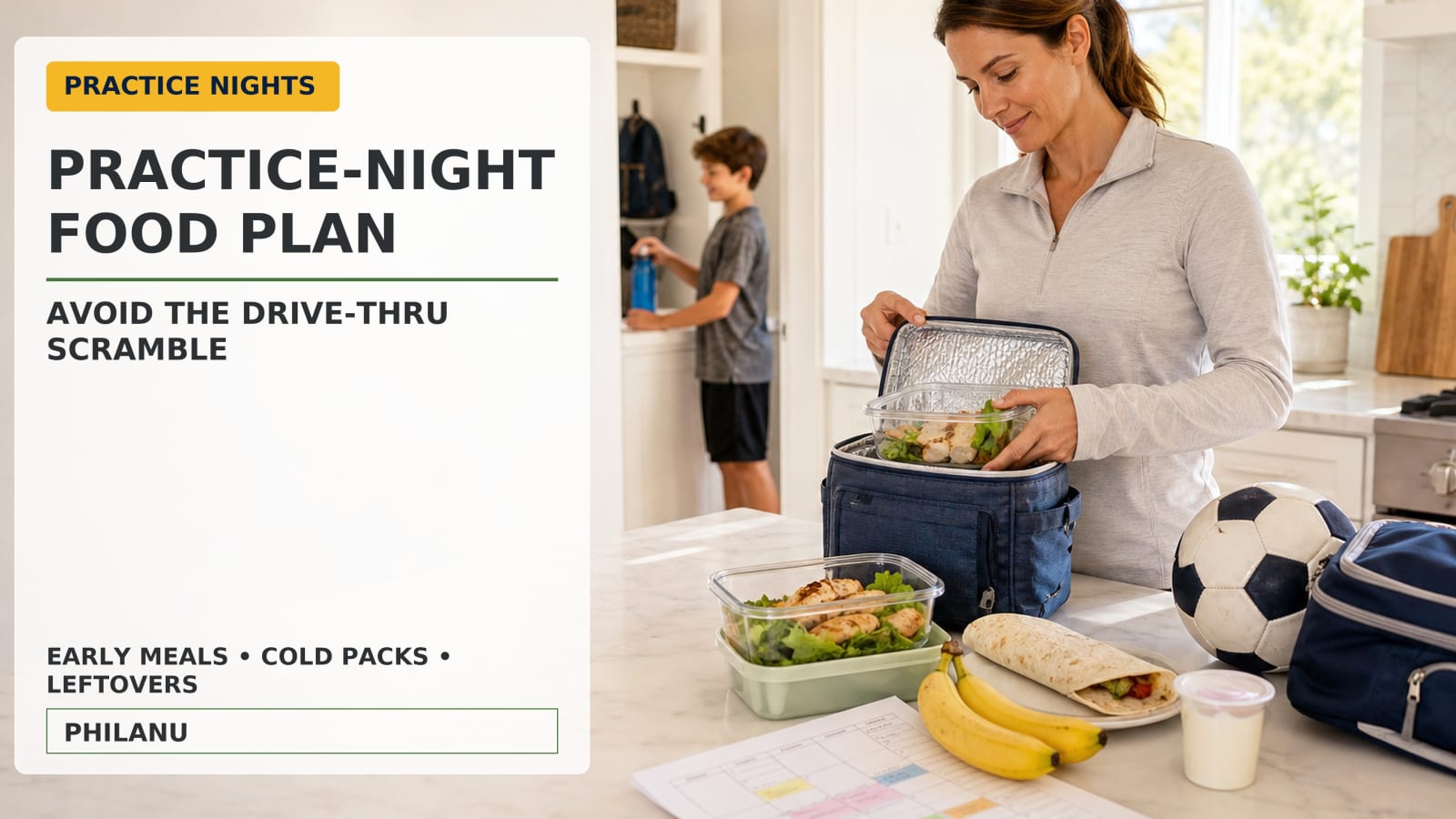
On a practice night, feed kids according to the clock rather than forcing one conventional dinner. Choose an early meal at home, a packed bridge meal, or a fast dinner after practice based on when each child leaves and returns. That small scheduling shift can keep hunger from turning into a drive-thru stop.
The usual weeknight meal plan assumes everyone is home at roughly the same hour. Practice seasons do not work that way. One child may need food at 4:30, another may eat at home at 6:00, and the athlete may be ready for dinner only after showers have started.
Instead of beginning with “What are we making for dinner?”, start with one calendar question: Who needs food, and when?
Pick the food window first
Use the practice schedule to choose the format before picking a recipe. This avoids making a full dinner that nobody has time to eat.
| Schedule | Food plan | Simple example |
|---|---|---|
| Time to eat before leaving | Early meal at home | Rice bowl, eggs and toast, pasta, or leftovers |
| Long gap until dinner | Packed bridge meal | Wrap or sandwich, fruit, and a cold side |
| Short practice and food ready at home | Post-practice heat-and-eat | Portioned leftovers, soup, quesadillas, or a freezer meal |
An early meal does not need to look like a formal family dinner. A child eating leftover chicken, rice, and vegetables at 4:20 p.m. has still eaten dinner. The sibling who is home later can have the same base at a different time.
A packed bridge meal is for the awkward stretch between school and a late practice or late dinner. Make it real food in a portable form, not a separate shopping category full of expensive snack packs. A half sandwich with fruit, a bean-and-cheese wrap, or crackers with cheese and applesauce may be enough to carry a child through practice, depending on the child and the activity.
Save the after-practice dinner for nights when it can truly happen soon after arriving home. If dinner still needs chopping, sautéing, and a 40-minute cleanup, it is not a practical backup for an 8:00 p.m. return.
Why five standard dinners often fail during sports season
Ordinary meal planning is built around one shared dinnertime. Activity-heavy families may need three different food moments on the same evening: an athlete eating before leaving, a sibling eating at home, and a later meal for the child who comes back hungry.
The American Academy of Pediatrics recognizes that busy schedules involving sports, dance, homework, and work can push families toward regrettable last-minute food choices. It also notes that young children doing light activity for an hour or less may not need extra food before and after exercise, while older or more active kids may need more deliberate planning. Appetite, age, practice length, intensity, and the time since the last meal all matter.
For an activity several hours away, the AAP generally recommends carbohydrates with a moderate amount of protein and less fat and fiber than a heavy meal. In ordinary family-food terms, that could be pasta with meat or bean sauce, a turkey-and-cheese sandwich with fruit, rice and beans, or eggs with toast.
After practice, hungry kids may benefit from a carbohydrate-and-protein snack or meal. That does not require sports powders or a second menu. Yogurt with fruit and cereal, reheated chili with crackers, or a bean-and-cheese quesadilla can fit the job.
If a child has diabetes, food allergies, digestive conditions, eating concerns, or clinician-directed nutrition needs, use this as household scheduling guidance rather than an individualized fueling plan. A pediatrician or registered dietitian can help tailor food timing and choices.
Use a 20-minute calendar reset before the week starts
Do this before shopping, or on the first calm evening of the week. The goal is not to create five impressive recipes. It is to prevent five rushed decisions.
- Write departure and return times beside each activity. Include travel and pickup time, not only the official practice slot.
- Mark who will be home for each eating window. The non-athlete may need a normal dinner while the athlete needs food in the car.
- Assign one food format to each practice night. Choose early meal, packed bridge meal, or heat-and-eat.
- Choose one calmer night for a larger meal. Cook enough to create intentional leftovers, not accidental ones.
- Name the emergency dinner now. Put it on the refrigerator list so another caregiver can find it without a chain of texts.
USDA MyPlate guidance supports this less glamorous version of meal planning: check the refrigerator, freezer, and pantry first; plan around the time available; make enough for leftovers; and use a mix of fresh, frozen, and shelf-stable foods. Those rules are particularly useful when the calendar is deciding dinner.
Buy a grocery base that can change shape
Practice weeks become costly when every night needs unrelated ingredients. A flexible grocery base lets the same food become an early bowl, a packed wrap, or a quick plate after practice.
- Flexible proteins: cooked chicken, ground meat, beans, eggs, or shredded cheese.
- Ready starches: rice, pasta, potatoes, tortillas, bread, or cereal.
- Produce that travels: bananas, apples, oranges, baby carrots, or grapes packed cold.
- Easy pairings: yogurt and fruit, a sandwich and applesauce, or crackers with cheese.
- One emergency meal: frozen soup, burritos, boxed macaroni and cheese with canned beans, or another fallback your household will actually eat.
Check school, team, and allergy rules before packing nut products. Cheese, sunflower-seed butter, beans, or yogurt may be more workable options where nuts are restricted.
The emergency meal is not evidence that the plan failed. It is the planned alternative to ordering food because practice ran long and everyone is hungry at once.
What this looks like with two overlapping schedules
Here is a hypothetical family of four. Maya has soccer Monday and Wednesday from 5:30 to 6:45 p.m. Eli has swim Tuesday and Thursday from 6:00 to 7:00 p.m. Friday is open. On Sunday, the family prepares chicken, rice, roasted vegetables, black beans, and enough fruit for several grab-and-go sides.
| Night | Timing choice | Food plan |
|---|---|---|
| Monday | Maya eats early | Chicken-rice bowl before soccer; Eli eats the same base later. |
| Tuesday | Eli takes a bridge meal | Chicken-and-rice wrap, banana, and cold yogurt. |
| Wednesday | Maya eats after practice | Black bean quesadilla with reheated vegetables. |
| Thursday | Eli takes a bridge meal | Cheese sandwich, fruit, and crackers; siblings eat leftover quesadillas. |
| Friday | Everyone eats together | Pasta with meat or bean sauce, with extra portions for the freezer. |
This family only plans one traditional shared dinner during the busy stretch. That is not abandoning family meals; it is matching the plan to the week on the calendar.
The Tuesday wrap is not a second dinner with a separate grocery list. It is Monday’s cooked chicken and rice in a form that works between pickup and swim. By Thursday, the plan gets easier on purpose. A workable meal plan should account for the household's energy, not just its ingredients.
Make the takeout trade-off visible
A backup meal is worth planning when it costs much less than the takeout it replaces. Use the total your family really pays: food, tax, delivery fees if any, tip, drinks, and the extra side that tends to get added when everyone is hungry.
Takeout avoided = usual all-in order total − added cost of the home backup.
For a hypothetical example, a $31 last-minute order replaced by an $8 freezer-and-fridge backup leaves $23 in the week’s budget. Your number may be much lower or higher. The useful part is calculating it from your own receipts once, before the next late pickup.
There is also a quieter saving: fewer orphan ingredients. Food that can cover an early meal, a packed bridge meal, and a reheated plate is less likely to turn into waste than a cart full of single-purpose “practice snacks” and unrelated dinner ingredients.
Cold food needs a real cold plan
Chicken wraps, yogurt, cheese, cut fruit, and leftovers are perishable. A sports bag and a car ride do not make them shelf-stable.
USDA food-safety guidance recommends using an insulated lunch bag with at least two cold sources for perishable food. Keep prepared cold foods refrigerated until it is time to leave. For an outdoor practice on a hot day, a small ice pack that was tossed in hours earlier may not be enough for a long afternoon.
Perishable food should not sit at room temperature for more than two hours, or more than one hour when temperatures are above 90°F. When the timing will not work, pack a shelf-stable item for later and serve the perishable meal at home instead.
Refrigerate cooked leftovers promptly. USDA says most cooked leftovers keep for three to four days in the refrigerator; freeze portions the family will not use in that window. A labeled freezer container is far more useful on Thursday than a mystery container at the back of the refrigerator.
Set up tonight before the afternoon gets away from you
Check today’s departure time. Then make one decision: serve food early, pack the bridge meal, or portion the after-practice dinner now.
Put the emergency meal where every caregiver can see it. Practice nights may still be loud, rushed, and full of wet towels. They do not have to require a brand-new dinner decision every evening.
If your refrigerator needs a reset before shopping, use Meal Plan With What You Have: A 3-Stop Family Week Reset. For larger packages that look tempting during a busy season, try this family test for buying groceries in bulk before buying more than the schedule can realistically use.
About this guide
Useful, people-first, practical content for U.S. families. Prioritize SAVE MONEY and TRAVEL when commercially appropriate.
This page separates sourced facts from estimates and examples, states important limitations, and passes separate editorial and publishing checks before it is posted. It is general information, not individualized professional advice.
Sources reviewed: (checked 2026-09-07)